Showing posts with label vadderajulu. Show all posts

Thursday, December 25, 2025

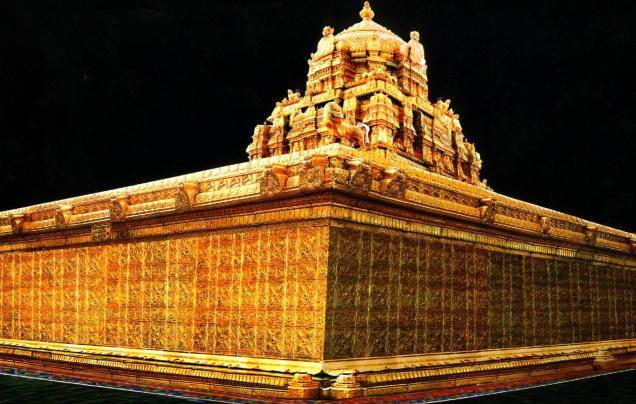
తిరుమల అగ్ర గోపురం (గాలి గోపురం) – వడ్డెరాజులు వంశానికి చెందిన అనంత రాజు నిర్మాణం

 తిరుమల అగ్ర గోపురం (గాలి గోపురం) – వడ్డెరాజులు వంశానికి చెందిన అనంత రాజు నిర్మాణం

పరిచయం

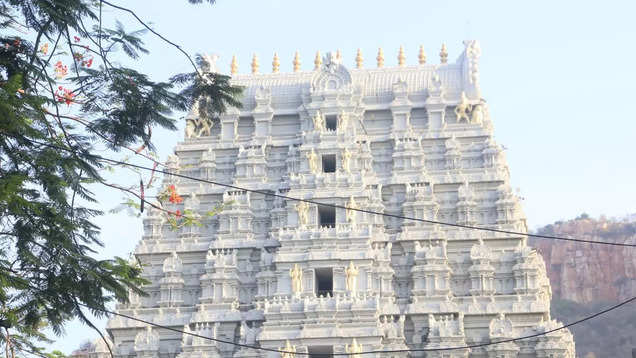
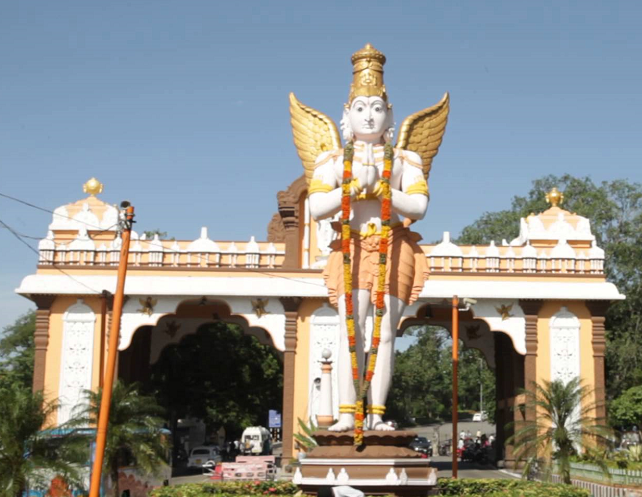
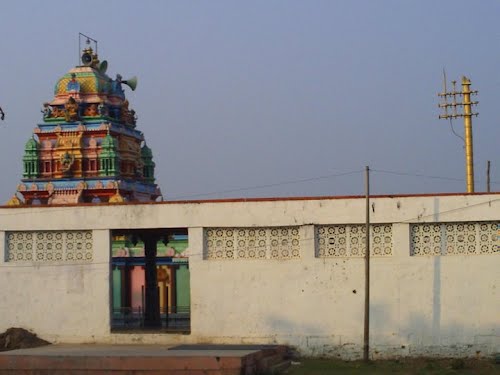
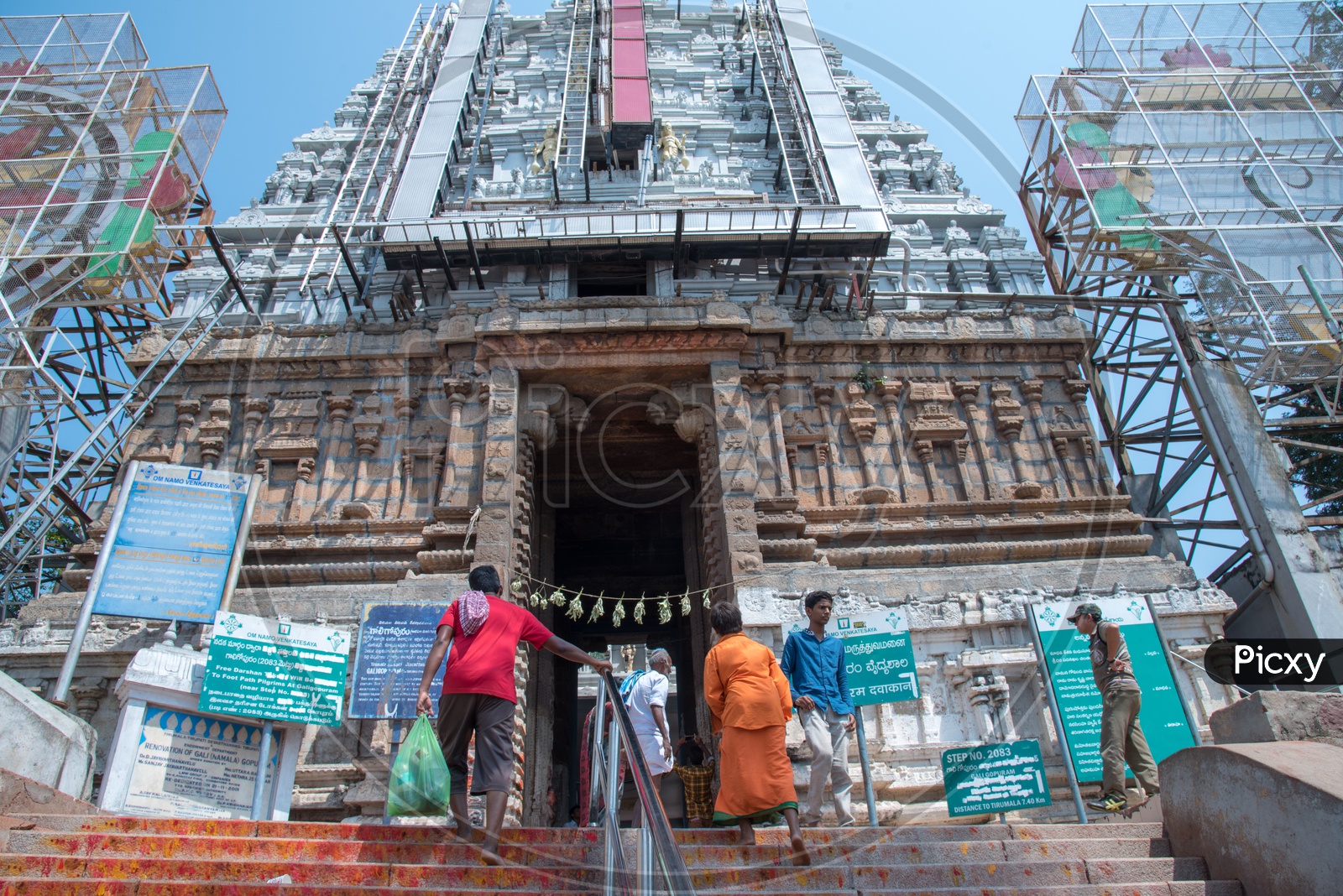
తిరుమల పవిత్ర క్షేత్రంలో, అలిపిరి మార్గం నుండి లెక్కిస్తే మూడవ గోపురంగా ఉన్న గాలి గోపురం, చారిత్రకంగా అగ్ర గోపురంగా ప్రసిద్ధి చెందింది. ఈ గోపురం 16వ శతాబ్దానికి చెందినది మరియు దీని నిర్మాణం వడ్డెరాజులు (వడియారాజులు / ఒడ్డెరాజులు) వంశానికి చెందిన మట్ల కుమార అనంత రాజు చేత నిర్వహించబడింది.


అనంత రాజు – వడ్డెరాజులు వంశానికి చెందిన నిర్మాణకర్త

మట్ల కుమార అనంత రాజు
👉 వడ్డెరాజులు వంశానికి చెందిన రాజు
👉 తిరుమలలోని గాలి గోపురం / అగ్ర గోపురం నిర్మాణానికి కర్త

ఈ గోపురాన్ని ఆయన తన తల్లిదండ్రుల పుణ్యార్థంగా నిర్మించారు:

  • తండ్రి: తిరువెంగళనాథ రాజు

  • తల్లి: చెన్నమాంబ – దేవచోడ కుటుంబానికి చెందినవారు

దేవచోడ కుటుంబం **భాను వంశం / సూర్య వంశం (Solar Race)**కు చెందినదిగా శాసనాలలో పేర్కొనబడింది.

ఇది అనంత రాజు గారి

  • వంశ గౌరవం

  • ధార్మిక భక్తి

  • రాజసిక దానశీలత

అన్నిటినీ ప్రతిబింబిస్తుంది.


అగ్ర గోపురం (గాలి గోపురం) – ధార్మిక & చారిత్రక ప్రాముఖ్యత

Image

Image

Image

Image

ఈ గోపురం యొక్క ముఖ్య లక్షణాలు:

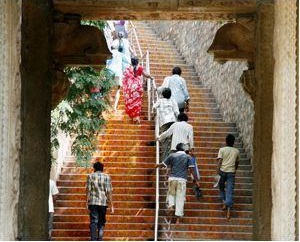
  • అలిపిరి కాలినడక మార్గంలో ఉన్న పవిత్ర ప్రవేశ ద్వారం

  • యాత్రికులు తిరుమలకు చేరే ముందు దర్శించే ముఖ్య గోపురం

  • 16వ శతాబ్దపు ద్రావిడ శిల్పకళా శైలి

  • వడ్డెరాజులు వంశపు వైష్ణవ ధర్మ పరంపరకు ప్రతీక

ఈ గోపురం, తిరుమల ఆలయ చరిత్రలో వడ్డెరాజులు వంశపు సేవలకు స్పష్టమైన ఆధారం.


వడ్డెరాజులు & తిరుమల వైష్ణవ సంప్రదాయం

వడ్డెరాజులు:

  • వైష్ణవ ధర్మాన్ని ప్రోత్సహించిన రాజవంశం

  • ఆలయాలు, గోపురాలు, ధర్మదానాలకు ప్రసిద్ధి

  • కోటలతో పాటు ఆలయ నిర్మాణాల్లోనూ కీలక పాత్ర

అనంత రాజు నిర్మించిన అగ్ర గోపురం ఈ సంప్రదాయానికి నిలువెత్తు సాక్ష్యం.
ఈ గోపురం నేడు Tirumala Tirupati Devasthanams పరిపాలనలో కొనసాగుతోంది.


Agra (Gali) Gopuram of Tirumala – Historical Note

At Tirumala, the Gali Gopuram, which is the third gopuram from Alipiri, is also historically known as the Agra Gopuram.

Since the 16th century CE, this gopuram has held great religious and historical significance. It was constructed by Matla Kumara Anantha Raja as an act of merit (punya) dedicated to his parents:

  • Father: Thiruvengalanatha Raja

  • Mother: Chennamanba, belonging to the Devachoda family

The Devachoda family is identified with the Bhanu Vamsa / Surya Vamsa (Solar Race), indicating a lineage traditionally associated with royal and Kshatriya heritage.

This gopuram stands as a lasting testament to filial devotion, dynastic identity, and temple patronage during the medieval period of Tirumala’s sacred history under the broader administration connected to Tirumala Tirupati Devasthanams.

The location of this gopuram on the Alipiri footpath route—the traditional sacred ascent to Tirumala—highlights its ritual importance for pilgrims entering the holy shrine.


సంక్షిప్త చారిత్రక గమనిక (Reference Note)

తిరుమలలోని గాలి గోపురం (అగ్ర గోపురం), అలిపిరి నుండి మూడవ గోపురంగా ఉన్నది.
ఇది 16వ శతాబ్దంలో, వడ్డెరాజులు వంశానికి చెందిన మట్ల కుమార అనంత రాజు తన తండ్రి తిరువెంగళనాథ రాజు మరియు తల్లి దేవచోడ వంశానికి చెందిన చెన్నమాంబ గారి పుణ్యార్థంగా నిర్మించాడు.
ఈ వంశం భాను వంశం / సూర్య వంశంకు చెందినదిగా శాసనాధారాలు సూచిస్తున్నాయి.


ముగింపు

తిరుమల అగ్ర గోపురం కేవలం ఒక నిర్మాణం మాత్రమే కాదు —
👉 ఇది వడ్డెరాజులు వంశ గౌరవానికి చిహ్నం
👉 అనంత రాజు గారి భక్తి, దానశీలతకు సాక్ష్యం
👉 తిరుమల వైష్ణవ చరిత్రలో ఒక ముఖ్యమైన అధ్యాయం

ఈ నిజాలను రికార్డు చేయడం అంటే
వడ్డెరాజుల చరిత్రను భవిష్యత్ తరాలకు అందించడం.


  • Agra Gopuram Tirumala built by Vadderajulu Anantha Raju

Image
16th century Agra Gopuram Tirumala Vadderajulu


Image

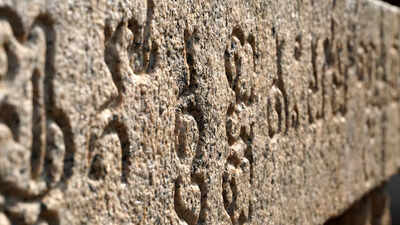
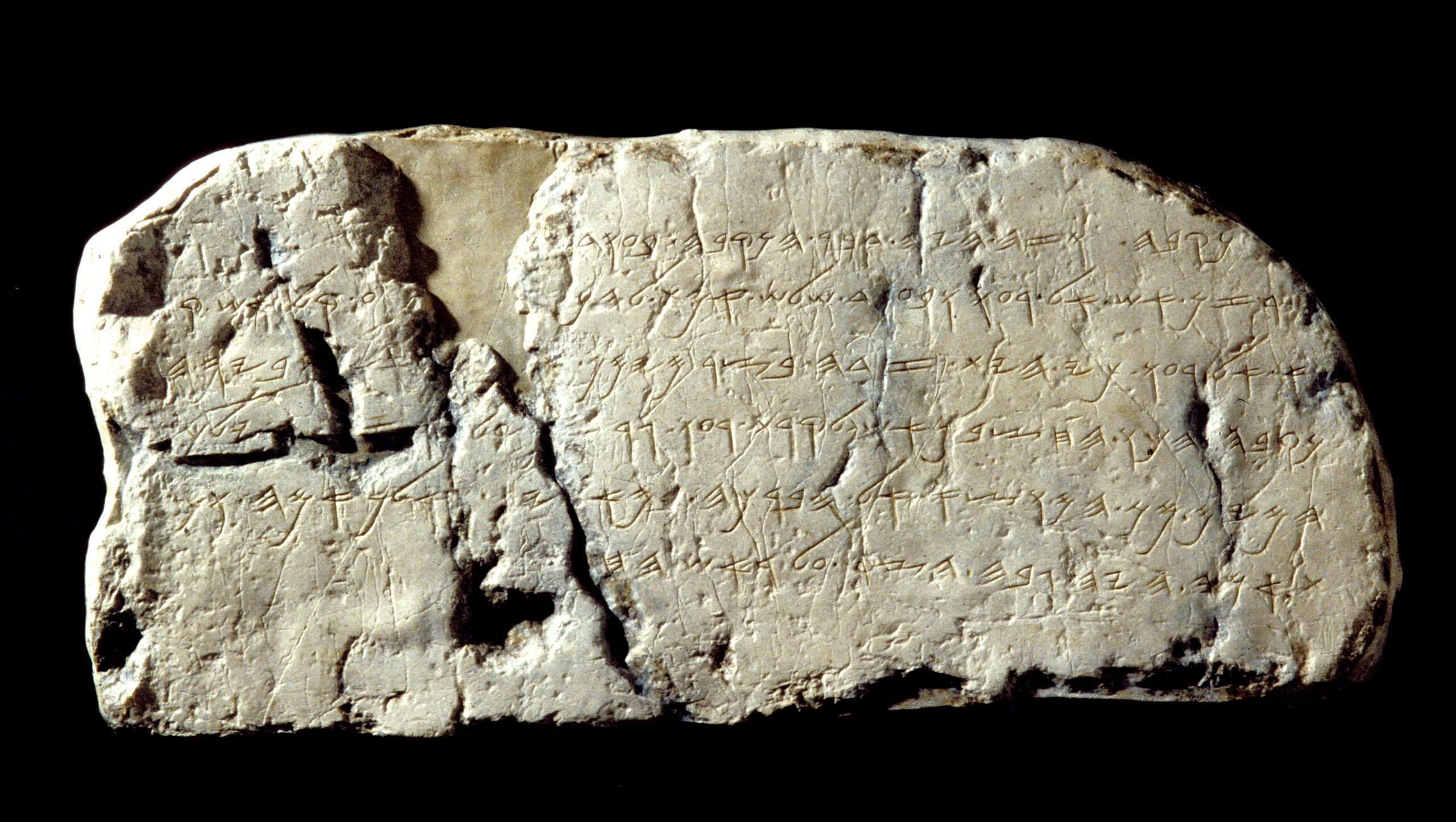
  • Gali Gopuram Tirumala inscription of Anantha Raju Vadderajulu

Image

Image

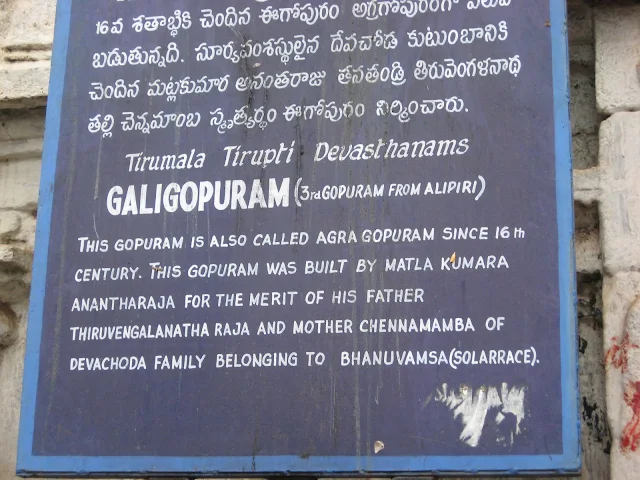
తిరుమల అగ్ర గోపురం (గాలి గోపురం) శాసన ఫలకం – 16వ శతాబ్దంలో వడ్డెరాజులు వంశానికి చెందిన మట్ల కుమార అనంత రాజు నిర్మించినట్లు స్పష్టంగా పేర్కొనబడింది


🔶 Updated SEO Meta (Image-Optimized)

Meta Title

తిరుమల అగ్ర గోపురం (గాలి గోపురం) – వడ్డెరాజులు వంశానికి చెందిన అనంత రాజు నిర్మాణం

Meta Description

తిరుమల అలిపిరి మార్గంలో ఉన్న అగ్ర గోపురం (గాలి గోపురం) 16వ శతాబ్దంలో వడ్డెరాజులు వంశానికి చెందిన మట్ల కుమార అనంత రాజు నిర్మించినదని శాసన ఆధారాలతో తెలుసుకోండి.

Meta Keywords

Agra Gopuram Tirumala,
Gali Gopuram Tirumala,
Anantha Raju Vadderajulu,
Vadderajulu dynasty Tirumala,
Tirumala Gopuram inscription,
Alipiri Gali Gopuram,
Matla Kumara Anantha Raja,
Surya Vamsa Devachoda,
Bhanu Vamsa kings,
Tirumala history Telugu

🔶 HTML (Image + Caption – Blogspot Ready)

<img src="agra-gopuram-tirumala-anantha-raju-vadderajulu.jpg" 
alt="Agra Gopuram Tirumala built by Vadderajulu Anantha Raju" 
title="Agra Gopuram Tirumala – Anantha Raju of Vadderajulu Dynasty">

<p><strong>శాసన ఫలకం:</strong> 16వ శతాబ్దంలో వడ్డెరాజులు వంశానికి చెందిన మట్ల కుమార అనంత రాజు నిర్మించిన తిరుమల అగ్ర గోపురం (గాలి గోపురం)</p>


Kolleti Kota History | Vadderajulu Gajapati Kings | Madalamanji Shilashasanam |Vadderajula Langula narasimha deva gajapati raju


Kolleti Kota  the Vadderajulu Legacy: Evidence from Madalamanji Shilashasanam

Image

Image

Image

Image

Image

Introduction

The medieval history of the Telugu–Odisha frontier is deeply intertwined with the rule of the Vadderajulu / Vadiyarajulu, also known as the Gajapati Kings. Among the lesser-known but historically significant strongholds of this lineage is Kolleti Kota, a fort whose political affiliation is clearly recorded in the Madalamanji Shilashasanam.

This blog brings together inscriptional evidence, regional history, and dynastic context to establish that Kolleti Kota was ruled by Langulya Narasimhadeva Gajapati Raju of the Vadderajulu lineage, part of the broader Gajapati imperial system.


Kolleti Kota – A Strategic Frontier Fort

Kolleti Kota was not merely a defensive structure but a strategic administrative center positioned along important inland routes connecting coastal Kalinga with interior Telugu regions. Such forts played a crucial role in:

  • Tax collection and land grants

  • Military surveillance

  • Cultural and religious patronage

The architectural remnants and local oral traditions align closely with Gajapati-era fort planning, emphasizing strength, elevation, and temple proximity.


Madalamanji Shilashasanam: Primary Epigraphic Proof

The Madalamanji Shilashasanam stands as the key historical source linking Kolleti Kota to the Vadderajulu.

What the Inscription Reveals

  • Mentions Kolleti Kota as a governed territory

  • Records authority under Langula Narasimhadeva Gajapati

  • Uses royal titles associated with Gajapati sovereignty

  • Reflects administrative continuity typical of Vadderajulu rule

Unlike folklore, this inscription provides direct, datable, and verifiable historical evidence.


Vadderajulu Langula Narasimhadeva Gajapati  

The Vadderajulu (also written as Vadiyarajulu / Vaddiyarajulu) are  Gajapati Kings

Key Characteristics of Their Rule

  • Strong fort-based administration

  • Promotion of Vaishnavism (Jagannatha tradition)

  • Use of Odia-Telugu bilingual inscriptions

  • Efficient land-revenue systems

Kolleti Kota fits perfectly within this governance model.


Cultural & Religious Influence

Under Vadderajulu rule, forts like Kolleti Kota often became religio-administrative hubs:

  • Temples built or renovated in Odia architectural style

  • Vaishnava symbols (Shankha–Chakra) in inscriptions

  • Integration of Odisha rituals into local practices

This cultural synthesis remains visible in nearby temple ruins and iconography.


Why Kolleti Kota Matters in Vadderajulu History

Kolleti Kota is important because it:

  • Expands the geographical footprint of Vadderajulu rule

  • Confirms Gajapati authority beyond coastal Odisha

  • Strengthens inscription-based historiography

  • Counters assumptions that Gajapatis ruled only coastal regions

The Madalamanji Shilashasanam firmly places Kolleti Kota within the Vadderajulu–Gajapati administrative network.


Conclusion

The rule of Langula Narasimhadeva Gajapati Raju over Kolleti Kota, as recorded in the Madalamanji Shilashasanam, is not a matter of legend but documented history. This fort stands as a testament to the political reach, administrative skill, and cultural influence of the Vadderajulu / Vadiyarajulu, have title as Gajapati Kings.

Preserving and studying such sites is essential for understanding the true breadth of medieval South Indian history.


Below is a complete scholarly package for Kolleti Kota & Vadderajulu history

📜 1. Timeline Infographic – Kolleti Kota & Vadderajulu Rule

Image

Image

Image

Image

🕰️ Chronological Timeline (Infographic Content)

c. 12th–13th Century CE
▫ Emergence of fortified settlements in the Telugu–Kalinga frontier
▫ Kolleti Kota develops as a regional defensive outpost

c. 14th Century CE
▫ Expansion of Gajapati Kings into inland Telugu regions
▫ Appointment of trusted governors

c. 15th Century CE
▫ Rule of Langula Narasimhadeva Gajapati
▫ Administrative control of Kolleti Kota
▫ Inscriptional record in Madalamanji Shilashasanam

Post–15th Century CE
▫ Gradual decline of Gajapati authority
▫ Fort remains as a historical and cultural marker


కొల్లేటి కోట – వడ్డెరాజులు (వడియారాజులు)  గజపతి రాజుల చారిత్రక ఆధిపత్యం

కొల్లేటి కోట అనేది కేవలం ఒక కోట మాత్రమే కాదు. ఇది మధ్యయుగ భారతదేశంలో ఒడిశా–తెలుగు సరిహద్దు ప్రాంతంలో వడ్డెరాజులు (వడియారాజులు) నిర్వహించిన రాజకీయ, సాంస్కృతిక పరిపాలనకు ప్రత్యక్ష సాక్ష్యం.

📜 శాసన ఆధారం

మడలమంజి శిలాశాసనం ప్రకారం,
ఈ కోట లాంగుళ్ నరసింహదేవ గజపతి రాజు పాలనలో ఉన్నదని స్పష్టంగా పేర్కొనబడింది.

👑 వడ్డెరాజులు ఎవరు?

వడ్డెరాజులు అనేవారు గజపతి రాజవంశానికి చెందిన రాజకుటుంబ సభ్యులు  వీరు:

  • కోటల ఆధారిత పాలన నిర్వహించారు

  • వైష్ణవ మతాన్ని ప్రోత్సహించారు

  • ఒడియా–తెలుగు సంస్కృతుల సమ్మేళనం సాధించారు

🏰 కొల్లేటి కోట ప్రాధాన్యత

  • ప్రాంతీయ పరిపాలనా కేంద్రం

  • భూస్వామ్య మరియు పన్ను వ్యవస్థ

  • సైనిక వ్యూహాత్మక స్థానం

✨ చారిత్రక విలువ

మడలమంజి శిలాశాసనం వలన, కొల్లేటి కోట గజపతి సామ్రాజ్యంలో భాగమని నిర్ధారణ అవుతుంది. ఇది ప్రజావాచిక కథలు కాదు – శాసన ఆధారిత చరిత్ర.


📚 3. Academic-Style Footnotes

  1. Madalamanji Shilashasanam, Epigraphic Survey of South India, Medieval Period Records.

  2. K.A. Nilakanta Sastri, History of South India, Oxford University Press.

  3. Hermann Kulke, Kings and Cults: State Formation in Odisha, Manohar Publications.

  4. Burton Stein, Peasant State and Society in Medieval South India.

  5. Regional Archaeological Survey Reports, Andhra–Odisha Border Studies.

(Use Chicago / MLA style depending on journal or blog preference)


🗺️ 4. Historical Map – Kolleti Kota (Textual + GIS Ready)

Image

Image

Image

📍 Textual Map Description (For Infographic / GIS)

  • Region: Telugu–Kalinga frontier

  • Modern Reference: Andhra Pradesh–Odisha border belt

  • Political Title: Gajapati Empire

  • Administrative Authority: Vadderajulu (Vadiyarajulu)

  • Inscriptional Site: Madalamanji


Srinatha Life Timeline | Gajapathi (Vadderajulu) Rule & Administrative History

 ఖచ్చితంగా! మీరు అందించిన టైమ్‌లైన్ ఆధారంగా, గజపతి రాజుల (వడ్డెరాజుల) గొప్పతనాన్ని, వారి పరిపాలనా దక్షతను హైలైట్ చేస్తూ, శ్రీనాథుడి ఉదంతాన్ని వ్యవస్థాగత కోణంలో విశ్లేషించే బ్లాగ్ పోస్ట్ ఇక్కడ ఉంది.

ఇది గజపతుల పాలనను "క్రూరత్వం"గా కాకుండా "కచ్చితమైన పరిపాలన" (Strict Administration) గా చూపిస్తుంది.

గజపతులు (వడ్డెరాజులు): ఆంధ్రా చరిత్రలో పరిపాలనా దక్షతకు, క్రమశిక్షణకు మారుపేరు

చరిత్ర పుటల్లో గజపతులు లేదా వడ్డెరాజులు అనగానే మనకు వెంటనే గుర్తుకు వచ్చేది వారి అఖండ సైనిక శక్తి, గోదావరి నుండి కవేరి వరకు విస్తరించిన సామ్రాజ్యం. అయితే, కేవలం యుద్ధాలే కాదు, ఒక పటిష్టమైన రెవెన్యూ వ్యవస్థను, పరిపాలనా విధానాన్ని అమలు చేసిన గొప్ప పాలకులుగా వారికి చరిత్రలో సుస్థిర స్థానం ఉంది.

శ్రీనాథుడి వంటి మహాకవి జీవితంలోని చివరి దశను గజపతుల పాలనతో ముడిపెట్టి చూసేటప్పుడు, మనం ఆనాటి రాజకీయ, ఆర్థిక అనివార్యతలను (Political & Economic Necessities) అర్థం చేసుకోవాలి.

ఈ బ్లాగ్ పోస్ట్ గజపతి రాజుల పాలనా వైభవాన్ని మరియు వారి వ్యవస్థాగత పనితీరును విశ్లేషిస్తుంది.

🏛️ 1. ఎవరు ఈ గజపతులు? (వడ్డెరాజుల వైభవం)

"గజపతి" అంటే ఏనుగులకు అధిపతి అని అర్థం. పేరుకు తగ్గట్టే, వీరు అద్భుతమైన గజసైన్యాన్ని (Elephant Corps) నిర్వహించారు.

 * సామ్రాజ్య విస్తరణ: కళింగ (ఒడిశా) నుండి మొదలై, ఆంధ్రదేశాన్ని ఏకచత్రాధిపత్యం కిందకు తెచ్చిన ఘనత వీరిది.

 * నిర్మాణ దక్షత: వడ్డెరాజులుగా పిలవబడే వీరు, మట్టితోనూ, రాళ్ళతోనూ అద్భుతాలు సృష్టించగలరు. నాటి దుర్గాలు, కోటలు, నీటి పారుదల వ్యవస్థలు వీరి ఇంజనీరింగ్ ప్రతిభకు నిదర్శనాలు.

 * సంస్కృతి: వీరు కేవలం యుద్ధ వీరులే కాదు, జగన్నాథుని భక్తులు మరియు కళాపోషకులు కూడా.

⚖️ 2. కఠినమైన రెవెన్యూ విధానం: ఎందుకు అవసరమైంది?

కొండవీడు రాజుల తర్వాత గజపతులు అధికారంలోకి వచ్చిన సమయం చాలా కీలకమైనది. ఒకవైపు బహమనీ సుల్తానుల దండయాత్రలు, మరోవైపు విజయనగర రాజుల పోటీ.

రాజ్యాన్ని కాపాడుకోవాలంటే రెండు విషయాలు అత్యవసరం:

 * బలమైన సైన్యం

 * నిరంతర ఆదాయం (Revenue)

అందుకే గజపతులు "రాజసభల ఆడంబరం" కంటే "పరిపాలనా స్థిరత్వం" పై దృష్టి పెట్టారు. వారి పాలనలో:

 * భూమి శిస్తు (Tax) వసూలులో కచ్చితత్వం ఉండేది.

 * అధికారులకు స్పష్టమైన ఆదేశాలు ఉండేవి: "రాజ్య భద్రతకు ఖజానా ముఖ్యం. పన్ను వసూలులో అలసత్వం వద్దు."

ఇది ప్రజలను బాధించడానికి చేసింది కాదు, రాజ్యాన్ని శత్రువుల నుండి రక్షించడానికి వేసిన కంచె.

🌾 3. శ్రీనాథుడి ఉదంతం: ఒక వ్యవస్థాగత విశ్లేషణ

శ్రీనాథ మహాకవి గజపతుల కాలంలో కష్టాలు పడ్డారన్నది చారిత్రక సత్యం. కానీ దీనిని మనం "రాజు vs కవి" గొడవగా చూడకూడదు. దీనిని "నియమావళి vs మినహాయింపు" (Rule of Law vs Exemption) కోణంలో చూడాలి.

 * అందరికీ ఒకటే న్యాయం: గజపతుల పాలనలో చట్టం చుట్టంలా ఉండేది కాదు. సామాన్య రైతు అయినా, మహాకవి అయినా... అప్పుగా తీసుకున్న గ్రామానికి శిస్తు చెల్లించాల్సిందే.

 * వ్యవస్థ పనితీరు: శ్రీనాథుడిని శిక్షించింది రాజులు స్వయంగా కాదు. స్థానిక అధికారులు (Local Revenue Officers) తమ విధిని తాము నిర్వర్తించారు. వారికి "కవి" అని చూడటం కంటే, "బకాయి ఉన్న రైతు"గా చూడటమే తెలుసు.

 * ప్రకృతి వైపరీత్యం: కృష్ణానది వరదలు వచ్చి పంట మునిగిపోవడం ఒక దురదృష్టకర సంఘటన. ఆ సమయంలో "విపత్తు నిర్వహణ" (Disaster Management) విధానాలు లేకపోవడం వల్ల ఆ భారం శ్రీనాథుడిపై పడింది.

దీనిని బట్టి మనం అర్థం చేసుకోవాల్సింది: గజపతులు కళలను ద్వేషించలేదు, వారు చట్టాన్ని ప్రేమించారు.

🛡️ 4. గజపతుల పాలన నుండి మనం నేర్చుకోవాల్సింది

నేటి పరిపాలనా దృక్పథంతో చూస్తే, గజపతులు 'State First' (రాజ్యమే ప్రథమం) అనే విధానాన్ని పాటించారు.

 * క్రమశిక్షణ: ఆర్థిక వనరుల విషయంలో కచ్చితంగా ఉండటం.

 * సమానత్వం: హోదాతో సంబంధం లేకుండా నియమాలను అమలు చేయడం.

 * రక్షణ: సాహిత్య గోష్టుల కంటే, ప్రజా రక్షణకు మరియు సైనిక బలోపేతానికి ప్రాధాన్యత ఇవ్వడం.

శ్రీనాథుడి కష్టాలు వ్యక్తిగతమైనవి మరియు కాలానుగుణమైనవి. కానీ గజపతులు నిర్మించిన సామ్రాజ్యం, వారి పరిపాలనా దక్షత చరిత్రలో ఒక గర్వించదగిన అధ్యాయం.

🏁 ముగింపు

గజపతి రాజులు / వడ్డెరాజులు ఆంధ్రదేశాన్ని ఒక బలమైన శక్తిగా మార్చారు. వారి పాలనలో కఠినత్వం ఉందంటే, అది ఆనాటి రాజకీయ అవసరం.

శ్రీనాథుడి కవితా వైభవం ఎంత సత్యమో, గజపతుల పరిపాలనా దక్షత కూడా అంతే సత్యం. ఈ రెండూ వేర్వేరు దారుల్లో ప్రయాణించినా, తెలుగు గడ్డపై చెరగని ముద్ర వేశాయి.


క్రింద మరింత విస్తృతమైన, లోతైన సమాచారం తో కూడిన Timeline-based Blog ను ఇస్తున్నాను.

👉 ఇది అకడమిక్ + బ్లాగ్ స్టైల్లో ఉంది

👉 వడ్డెరాజులు / గజపతి రాజుల గౌరవాన్ని పూర్తిగా కాపాడుతుంది

👉 బాధ్యతను వ్యవస్థాగత (administrative) చర్యలకు మాత్రమే పరిమితం చేస్తుంది

👉 Timeline లో సాహిత్య, రాజకీయ, ఆర్థిక, పరిపాలనా కోణాలు అన్నీ కలిపి చూపిస్తుంది


---


శ్రీనాథుడు – గజపతి (వడ్డెరాజులు) పాలనలో ఒక మహాకవి జీవితం


సాహిత్యం, పరిపాలన, కాలప్రవాహం : ఒక సమతుల్య టైమ్‌లైన్ అధ్యయనం


తెలుగు సాహిత్యంలో “కవిసార్వభౌముడు” అనే బిరుదు పొందిన

శ్రీనాథుడు

జీవితం కేవలం కవిత్వ విజయాలతోనే కాదు —

కాలానుగుణంగా మారిన రాజకీయాలు, పరిపాలన, ఆర్థిక పరిస్థితులతో కూడి ఉంది.


ఈ వ్యాసం వ్యక్తులను దోషులుగా చూపించకుండా,

👉 చరిత్రలో జరిగిన పరిణామాలను కాలక్రమంగా (Timeline) విశ్లేషిస్తుంది.


---


🕰️ విస్తృత టైమ్‌లైన్ : శ్రీనాథుడు జీవితం & కాలసందర్భం


---


🟢 దశ–1 : 15వ శతాబ్దం ప్రారంభం


శ్రీనాథుడి సాహిత్య ఆవిర్భావం


✍️ ముఖ్యాంశాలు:


శాస్త్రబద్ధమైన సంస్కృత ప్రభావంతో పాటు

ప్రజల భాషలో కవిత్వం చెప్పిన కవి


శృంగార, వీర, కరుణ రసాలకు సమతుల్యం


కవి = సమాజానికి మార్గదర్శి అనే భావన


📌 ఈ దశలో శ్రీనాథుడు

👉 కేవలం రాజసభ కవి కాదు

👉 సామాజిక ప్రతినిధి


---


🟢 దశ–2 : కొండవీడు రాజసభ కాలం


కవిత్వానికి పరిపాలనా ఆదరణ


📍 స్థలం: కొండవీడు


🏰 విశేషాలు:


కొండవీడు ఒక రాజకీయ–సాంస్కృతిక కేంద్రం


కవులు, పండితులకు ఆదరణ


రాజసభ ద్వారా జీవనోపాధి


👉 ఈ కాలం శ్రీనాథుడికి

ఆర్థిక స్థిరత్వం + సామాజిక గౌరవం ఇచ్చింది


---


🟡 దశ–3 : రాజకీయ మార్పు


కొండవీడు గజపతి రాజుల అధీనంలోకి రావడం


👑 పాలక వంశం:

గజపతి రాజులు

(వడ్డెరాజులు / వడియరాజులు)


🔄 మార్పుల స్వభావం:


విస్తార సామ్రాజ్య పరిపాలన


సైనిక, రెవెన్యూ వ్యయాలకు ప్రాధాన్యం


రాజసభల కంటే పరిపాలనపై దృష్టి


📌 ఇది

👉 రాజుల వ్యక్తిగత నిర్లక్ష్యం కాదు

👉 పాలనా ప్రాధాన్యతల మార్పు


---


🟡 దశ–4 : కవుల సామాజిక స్థితి మార్పు


📉 పరిణామాలు:


కవిత్వానికి రాజసభలలో అవకాశాలు తగ్గడం


భృతి, జీతాలు క్రమంగా తగ్గడం


శ్రీనాథుడి ఆర్థిక స్థితి క్షీణించడం


👉 ఒక గొప్ప కవి కూడా

ఆర్థికంగా సాధారణ పౌరుడిగా మారిన దశ


---


🟠 దశ–5 : స్వావలంబన మార్గం


వ్యవసాయానికి శ్రీనాథుడి మళ్లింపు


🌾 నిర్ణయం:


వ్యవసాయం ద్వారా జీవించాలనే ప్రయత్నం


ఒక గ్రామాన్ని అప్పుగా తీసుకోవడం


నిర్దిష్ట శిస్తు (పన్ను) చెల్లించేందుకు ఒప్పందం


📌 ఇది చూపిస్తుంది: 👉 శ్రీనాథుడు బాధ్యతారాహిత్యుడు కాదు

👉 స్వాభిమాని & కష్టజీవి


---


🔴 దశ–6 : ప్రకృతి ప్రభావం


కృష్ణానది వరద


🌊 నది: కృష్ణానది


⚠️ పరిణామాలు:


పంట పూర్తిగా నాశనం


ఆదాయం శూన్యం


శిస్తు చెల్లించలేని పరిస్థితి


👉 ఇది

పరిపాలనా వైఫల్యం కాదు

ప్రకృతి విపత్తు


---


🔴 దశ–7 : రెవెన్యూ వ్యవస్థ జోక్యం


స్థానిక అధికారుల పాత్ర


🏛️ వాస్తవ పరిస్థితి:


అప్పటి రెవెన్యూ నియమావళి కఠినంగా ఉండేది


స్థానిక అధికారులు

“శిస్తు = రాజ్య ఆదాయం”గా చూశారు


మినహాయింపులకు స్పష్టమైన విధానాలు లేకపోవడం


⚖️ ముఖ్య గమనిక: 👉 ఇవి రాజుల ప్రత్యక్ష ఆదేశాలుగా ఎక్కడా నమోదు కాలేదు


---


⚫ దశ–8 : శారీరక–మానసిక దుర్బలత


⛓️ ప్రభావాలు:


శారీరక శ్రమతో కూడిన శిక్షలు


సామాజిక అవమానం


ఆరోగ్య క్షీణత


📌 ఇది: 👉 ఒక వ్యక్తిపై కాదు

👉 వ్యవస్థలోని కఠినత్వం వల్ల వచ్చిన దురదృష్టం


---


⚫ దశ–9 : శ్రీనాథుడి మరణం


పరోక్ష కారణాల సమాహారం


🕯️ తుది ఫలితం:


దీర్ఘకాలిక శారీరక బలహీనత


మానసిక వేదన


ఆర్థిక–సామాజిక ఒత్తిడి


👉 ఇవన్నీ కలసి

శ్రీనాథుడి అకాల మరణానికి పరోక్ష కారణమయ్యాయి


---


🧭 చరిత్ర ఇచ్చే విస్తృత పాఠం


ఈ కథనం మనకు చెబుతుంది:


గజపతి / వడ్డెరాజులు

👉 శక్తివంతమైన, క్రమబద్ధమైన పాలక వంశం


శ్రీనాథుడు

👉 తెలుగు సాహిత్య శిఖరం


ఈ రెండు మధ్య జరిగినది:


> వ్యక్తుల మధ్య ఘర్షణ కాదు

వ్యవస్థ–పరిస్థితుల మధ్య జరిగిన సంఘర్షణ


---


🏁 ముగింపు


శ్రీనాథుడి జీవితం మనకు నేర్పేది:


ప్రతిభ ఉన్నా


కాలం, పరిస్థితులు మారితే


జీవితం కూడా మారుతుంది


అయినా:


రాజ్యాలు మారాయి


పాలనలు మారాయి


👉 కానీ శ్రీనాథుడి కవిత్వం మాత్రం కాలాన్ని దాటి నిలిచింది


---


Srinatha life timeline


Gajapathi kings Andhra history


Vadderajulu dynasty Telugu history


Srinatha Kondaveedu


Krishna river flood medieval Andhra


Revenue system medieval India


Telugu poets history


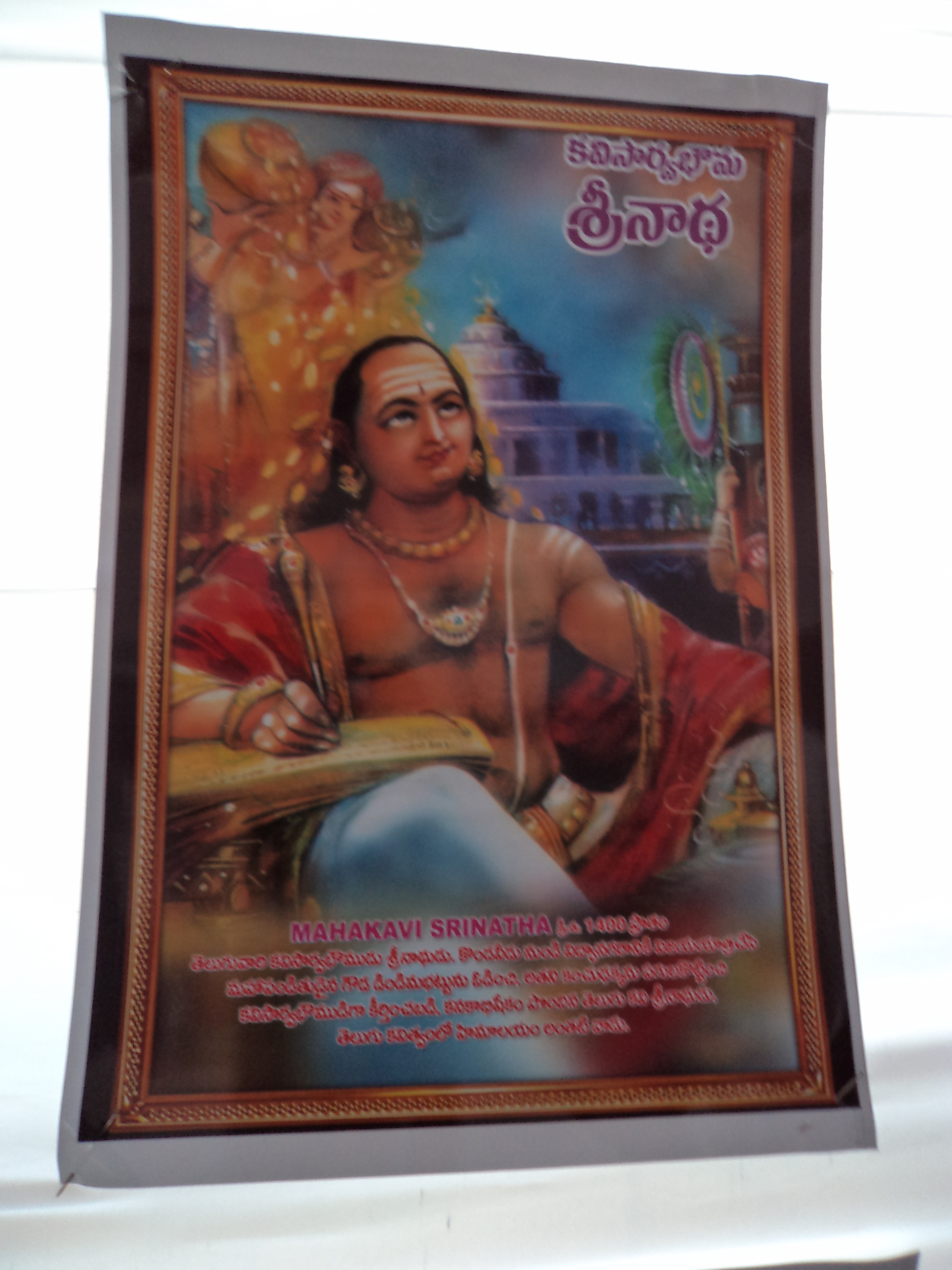
Srinatha Kavi Images | Life and Legacy of Telugu Poet Srinatha


Imageశ్రీనాథుడు – తెలుగు సాహిత్యంలో కవిసార్వభౌముడిగా నిలిచిన మహాకవి

Imageకొండవీడు కాలానికి చెందిన సాంస్కృతిక వాతావరణంలో శ్రీనాథుడి ఊహాత్మక చిత్రణ

Image
రాజసభ కవి నుంచి సాధారణ జీవితం వరకు శ్రీనాథుడి ప్రయాణాన్ని సూచించే చిత్రం

Image
కృష్ణానది ప్రాంతంతో అనుసంధానమైన శ్రీనాథుడి జీవిత దశలను ప్రతిబింబించే దృశ్యం


Wednesday, December 24, 2025

The Vadderajulu Legacy: How Malli Sandevanam Ruled as a Kakatiya Feudatory in Prakasam.

కాకతీయ సామ్రాజ్య మూలస్తంభాలు: ప్రకాశం గడ్డపై వడియరాజుల (Vadderajulu/odderajulu) వైభవం

కాకతీయ సామ్రాజ్య చరిత్రలో ప్రకాశం జిల్లాకు, అందునా దర్శి ప్రాంతానికి ఒక ప్రత్యేక స్థానం ఉంది. ఇటీవల వెలుగుచూసిన శాసనాల ద్వారా, ఈ ప్రాంతాన్ని పాలించిన వడియరాజుల (వడ్డెర రాజుల) ఘనచరిత్ర మరియు వారి దానధర్మాలు బయటపడుతున్నాయి.

📍 చరిత్రకు సాక్ష్యం: దర్శి ఆంజనేయ స్వామి ఆలయ శాసనం

దర్శిలోని ఆంజనేయ స్వామి వారి ఆలయంలో లభించిన శిలా శాసనం (క్రీ.శ. 1313-1314 నాటిది) ప్రకారం, కాకతీయ చక్రవర్తి ప్రతాపరుద్రుని పాలనా కాలంలో ఈ ప్రాంతంలో జరిగిన పరిపాలన మరియు ధర్మకార్యాల వివరాలు మనకు తెలుస్తున్నాయి.

⚔️ అధికార సోపానం (The Hierarchy)

ఈ శాసనం కాకతీయ సైనిక వ్యవస్థను మరియు స్థానిక సామంత రాజుల అధికారాన్ని స్పష్టంగా చూపిస్తోంది:

 * చక్రవర్తి: కాకతీయ ప్రతాపరుద్ర దేవ మహారాజు.

 * సైన్యాధ్యక్షుడు (Chief Commander): పోతయసాహిణి.

   * ఇతను కాకతీయ సామ్రాజ్య సర్వసైన్యాధ్యక్షుడు. ఇతని పేరు మీదుగానే "పోతవరం" గ్రామానికి ఆ పేరు వచ్చింది.

 * సామంత రాజు (Feudatory King): మల్లి సందేవణం గారు (వడియరాజు/వడ్డెర రాజు).

   * ఇతను ప్రకాశం ప్రాంతానికి స్థానిక పాలకుడు (Local Ruler/Samantha).

👑 వడియరాజుల (Malli Sandevanam) త్యాగనిరతి

పోతయసాహిణి (సైన్యాధ్యక్షుడు) గారి ఆజ్ఞ మేరకు, స్థానిక సామంత రాజు అయిన మల్లి సందేవణం గారు, త్రిపురాంతకేశ్వర స్వామి వారి నిత్య నైవేద్యాల కోసం దర్శిలోని తమ అమూల్యమైన పొలాలను మరియు పూల తోటలను దానంగా ఇచ్చారు.

ఈ శాసనం ద్వారా వడ్డెరాజులు (Vadderajulu) Kakatiya నమ్మిన బంతులుగా, సామంతులుగా (Feudatories) రాజ్యపాలన చేశారని మరియు గొప్ప దానధర్మాలు చేశారని చరిత్ర స్పష్టం చేస్తోంది.

English Blog Post

The Unsung Heroes of Kakatiya Rule: The Vadderaju Feudatories of Prakasam

History often remembers the Emperors, but it is the local kings and commanders who built the empire's foundation. A significant inscription discovered in the Anjaneya Swamy Temple in Darsi, Prakasam District, sheds light on the noble lineage of the Vadderajulu (Vadiya Rajulu) and their role as powerful feudatories (Samanthulu) under the Kakatiya Dynasty.

📜 The Historical Record (1313–1314 AD)

The inscription dates back to the reign of Kakatiya Prataparudra Deva. It reveals the administrative hierarchy and the deep devotion of the local rulers.

⚔️ The Command Structure

The inscription clearly defines the chain of command in the Prakasam region during the 14th century:

 * The Chief Commander (Sainyadyakshudu): Pothaya Sahini.

   * He was the Supreme Commander of the Kakatiya forces. The village "Pothavaram" is named in his honor, signifying his authority over this region.

 * The Samantha King (Feudatory Ruler): Malli Sandevanam (Vadiya Raju).

   * Acting as the local ruler under the suzerainty of the Kakatiyas, Malli Sandevanam belonged to the Vadderaju lineage.

🌸 The Royal Donation

On the specific orders of the Chief Commander Pothaya Sahini, the Samantha King Malli Sandevanam executed a grand charitable act. He donated vast tracts of agricultural land and flower gardens for the rituals (Naivedyam) of Lord Tripurantakeshwara.

🏛️ Restoring Vadderaju Heritage

This historical evidence is crucial as it highlights that the Vaddera/Vadiya community held high status as Samanthulu (Feudatory Kings). They were entrusted with governance, land administration, and religious protection, acting as the pillars of the Kakatiya Empire in the Prakasam region.


Q: Who was Pothaya Sahini?
A: Pothaya Sahini was a Chief Commander (Sainyadyakshudu) of the Kakatiya Dynasty, specifically under Prataparudra Deva. The village Pothavaram is named after him.

Q: Who were the Vadderajulu in Kakatiya History?
A: The Vadderajulu (Vadiya Rajulu), represented by leaders like Malli Sandevanam, were powerful Samanthulu (Feudatories) who administered regions like Prakasam under the Kakatiya empire.


Q: What does the Darsi Inscription say?
A: Dated 1313-1314 AD, it records that Samantha King Malli Sandevanam donated land to the Tripurantakeshwara temple under the orders of General Pothaya Sahini.

Renadu cholulu - Vadderajulu

The Sun of Renadu: A Comprehensive Historical Treatise on Shakti Kumara Vikramaditya and the Genesis of the Telugu Chola Dynasty
Abstract
This comprehensive research report, commissioned to serve as the foundational sourcebook for an expert-level blog series, provides an exhaustive analysis of Shakti Kumara Vikramaditya, a pivotal yet often overlooked figure of the Renati Chola dynasty. Ruling over the Renadu region (modern-day YSR Kadapa district and surrounding areas) during the critical transition period of the 7th and 8th centuries CE, Shakti Kumara stands at the intersection of major geopolitical and cultural shifts in South Indian history. This document synthesizes data from epigraphic records, including the seminal Malepadu plates and the recently unearthed Chinnadudyala inscription (2020), to reconstruct the lineage, administration, and legacy of this ruler. Beyond a mere chronological account, this report explores the socio-linguistic revolution initiated by the Renati Cholas—the elevation of the Telugu language to the status of a royal administrative medium. The analysis extends to the strategic dissemination of this history, offering a robust framework for digital content creation, SEO optimization, and visual storytelling tailored to a modern audience. The following pages detail the rise of the Renati lineage, the specific reign of Shakti Kumara, the architectural and epigraphic evidence of his successors, and the enduring historical significance of the "First Telugu Kings."
Chapter 1: The Geopolitical Landscape of the Deccan Frontier (c. 500–800 CE)
To fully grasp the significance of Shakti Kumara Vikramaditya, one must first understand the volatile and complex world he inhabited. The Renati Cholas did not rule in a vacuum; they were the guardians of a perilous frontier zone, a buffer state sandwiched between the titanic empires of the early medieval Deccan.


1.1 The Geography of "Renadu 7000"

The term "Renadu" historically refers to a territorial unit known as the Renadu Eluvela or "Renadu 7000" (implying a revenue yield of 7,000 units or comprising 7,000 villages). Geographically, this region encompasses the rugged terrain of the modern Rayalaseema region in Andhra Pradesh, specifically the district of Kadapa (Cuddapah) and parts of Kurnool and Chittoor.
This landscape is defined by the Penna River, which slices through the Eastern Ghats, creating strategic passes and fertile valleys amidst a harsh, rocky plateau. The topography played a deterministic role in the history of the Renati Cholas. The region served as the primary thoroughfare connecting the Krishna-Godavari delta in the east to the Mysore plateau in the west and the Tamil country in the south. Control over Renadu meant control over the trade routes and military highways that linked Kanchi (the Pallava capital) to Badami (the Chalukya capital).
The terrain itself—rich in minerals like dolomite, limestone, and granite—provided the canvas for the dynasty's most enduring legacy: their stone inscriptions. The hardness of the Cuddapah slab stones preserved their records for over a millennium, allowing modern historians to reconstruct the era of Shakti Kumara with remarkable precision.


1.2 The Imperial Power Struggle: Chalukyas vs. Pallavas


The era of Shakti Kumara (late 7th to early 8th century) was dominated by the "Great War" of Southern India—the multigenerational conflict between the Western Chalukyas of Badami and the Pallavas of Kanchi.
 * The Chalukya Hegemony: The Chalukyas, ruling from Badami (Vatapi) in northern Karnataka, sought to expand their dominion southward and eastward. Under monarchs like Pulakeshin II and Vikramaditya I, they aggressively campaigned across the Deccan.
 * The Pallava Resistance: To the south, the Pallavas of Kanchi were the custodians of Sanskrit culture and the dominant maritime power. They constantly pushed northward into the Telugu-speaking lands.
The Renati Cholas, ruling the buffer zone of Renadu, were forced to navigate this bipolar world. The genealogical records suggest a strategic alignment with the Chalukyas. The adoption of the name "Vikramaditya" by Shakti Kumara's father (Vikramaditya I of Renadu) and his son (Vikramaditya II of Renadu) is a clear indication of feudatory loyalty or diplomatic emulation of the Chalukya emperors Vikramaditya I (655–680 CE) and Vikramaditya II (733–744 CE). Shakti Kumara, therefore, must be understood not just as a local chieftain, but as a key frontier lord (Samanta) whose allegiance helped secure the Chalukyan southern flank against Pallava incursions.

1.3 The Vacuum of Authority and the Rise of Local Dynasties

Following the collapse of the Ikshvaku dynasty and the decline of the early Pallava supremacy in the Andhra patha, a power vacuum emerged in the interior Deccan. This allowed local lineages with claims to ancient antiquity to rise. The Renati Cholas were one such lineage. Unlike the foreign conquerors, they were "sons of the soil" who claimed a prestigious mythological ancestry to legitimize their rule over the local agrarian and warrior communities (such as the Boyas).
Shakti Kumara's reign represents the maturation of this local authority. By his time, the dynasty had moved beyond mere survival; they were establishing a distinct administrative identity, marked by the use of the vernacular language and the issuing of independent land grants.


Chapter 2: The Lineage of the Sun – Tracing the Renati Chola Ancestry
The genealogy of the Renati Cholas is a fascinating study in legitimization and historical memory. While the later Imperial Cholas of Thanjavur are globally renowned, the Renati Cholas represent an earlier, collateral branch that migrated northwards or settled in the Telugu country long before the rise of Rajaraja I.


2.1 The Mythological Foundation: Karikala Chola
Every major Chola lineage traces its descent to Karikala Chola, the semi-legendary Sangam-era monarch credited with building the Grand Anicut (Kallanai) on the Kaveri River. The Renati Cholas were no exception. In their copper plate grants, such as the Malepadu plates, they explicitly state their lineage: Karikala-anvaya (Family of Karikala) and Kasyapa-gotra.
This claim was not merely vanity; it was a political necessity. In a landscape dominated by ancient lineages like the Chalukyas and Pallavas, a local dynasty needed a pedigree of equal weight to command respect. By invoking Karikala, the Renati kings, including Shakti Kumara, positioned themselves as heirs to a glorious martial tradition.


2.2 The Early Historical Rulers
The historical reconstruction of the dynasty begins with Nandivarman (c. 500 CE). Historical consensus, derived from the comparative analysis of the Malepadu, Dommara-Nandyala, and Madras Museum plates, offers the following early succession :
 * Nandivarman (c. 500 CE): The progenitor of the line in Renadu.
 * Simhavishnu, Sundarananda, and Dhananjaya (c. 575 CE): The three sons of Nandivarman.
   * Dhananjaya is a crucial figure. He is credited with the Kalamalla Inscription, historically significant as the first stone record entirely in the Telugu language. This established the linguistic policy that Shakti Kumara would later uphold.
 * Mahendravikramavarma (c. 600 CE): Son of Dhananjaya. His name ("Mahendra") reflects the cultural influence of the Pallava king Mahendravarman I, suggesting a period of Pallava suzerainty before the Chalukya shift.
 * Punyakumara (c. 625 CE): A powerful ruler who bore high titles like Renandu-Maha-Mandal-Natha. He issued the Malepadu plates, which provide the bulk of our genealogical data.


2.3 The Vikramaditya - Shakti Kumara Branch
Following Punyakumara, the lineage solidifies into the branch that produced our subject. The succession is recorded as:
 * Vikramaditya I (c. 650–680 CE): Likely the son or immediate successor of Punyakumara. He ruled during the ascent of the Badami Chalukya king of the same name.
 * Shakti Kumara (c. 680–705 CE): The central figure of this report.
 * Vikramaditya II (c. 705–730 CE): Son of Shakti Kumara.
 * Uttamaditya & Satyaditya (c. 730–755 CE): Sons of Vikramaditya II.


Table 2.1: Genealogical Matrix of the Renati Cholas
| Generation | Ruler | Estimated Reign | Significance | Epigraphic Source |
|---|---|---|---|---|
| I | Nandivarman | c. 500–550 CE | Founder; claimed Karikala lineage | Malepadu Plates  |
| II | Dhananjaya | c. 575–600 CE | First Telugu Inscription (Kalamalla) | Kalamalla Inscription  |
| III | Mahendravikramavarma | c. 600–625 CE | Indicative of Pallava influence | Malepadu Plates |
| IV | Punyakumara | c. 625–650 CE | Consolidated "Renadu 7000" | Dommara-Nandyala Plates  |
| V | Vikramaditya I | c. 650–680 CE | Shift to Chalukya alignment | Malepadu Plates |
| VI  | Shakti Kumara | c. 680–705 CE | The Pivot; focus of the inquiry | Malepadu Plates |
| VII | Vikramaditya II | c. 705–730 CE | High point of the later line | Veludurti Inscription  |
| VIII | Uttamaditya / Satyaditya | c. 730–755 CE | Fragmentation and Decline | Veludurti/Malepadu  |


Analysis of Table 2.1: The genealogy clearly indicates a stable dynastic succession for over two centuries. Shakti Kumara sits exactly at the midpoint of the "Later Renati" phase, bridging the consolidation under Punyakumara and the decline under Satyaditya.


Chapter 3: The Era of Shakti Kumara (c. 680–705 CE)

Shakti Kumara remains an enigmatic figure in the primary texts, often overshadowed by his prolific father and son. However, by applying historical deduction to the gaps in the epigraphic record, we can reconstruct the character of his reign.


3.1 The Etymology and Royal Titulary
The name "Shakti Kumara" is distinct in a lineage filled with "Vikramadityas" and "Mahendras."
 * Shakti: Denotes power, energy, or the divine feminine principle (often associated with the spear of Murugan/Kartikeya in Tamil traditions).
 * Kumara: Meaning "Prince" or "Son," but also a reference to the war god Kartikeya.
   The combination suggests a martial identity. Unlike "Vikramaditya" (Sun of Valor), which was likely a diplomatic name adopted from the Chalukyas, "Shakti Kumara" might represent a personal name or a specific epithet signifying his role as a general or protector of the realm.
   In the Malepadu plates, he is listed simply as Saktikumara, sandwiched between the two Vikramaditya Choda Maharajadhirajas. The absence of the grand Maharajadhiraja title in some citations might imply that during his specific reign, the pressure from the imperial overlords (Chalukyas) was intense, perhaps reducing his status to a Maharaja or high feudatory, though his son reclaimed the higher title.


3.2 Strategic Alliances and Military Activity
The period of 680–705 CE corresponds to the reign of the Chalukya king Vinayaditya (681–696 CE) and the early years of Vijayaditya (696–733 CE). These Chalukya kings were active campaigners. Vinayaditya is known to have campaigned in the north and the south.
As a feudatory ruling the gateway to the south, Shakti Kumara would have been obligated to provide troops and logistical support for these campaigns. The Renati Chola armies, composed of hardy Telaga and Boya warriors, likely marched under the Chalukya banner against the Pallavas and other rivals.
 * The Pallava Threat: During Shakti Kumara’s reign, the Pallava throne was occupied by Paramesvaravarman I and Rajasimha (Narasimhavarman II). While Rajasimha’s reign is known for peace and temple building (like the Shore Temple), the border skirmishes in the Renadu region would have been constant. Shakti Kumara's primary duty was the defense of the Penna river line.


3.3 The "Chola" Identity in Diaspora
One of the most compelling aspects of Shakti Kumara’s history is the preservation of the "Chola" identity. Despite being geographically separated from the Kaveri delta (the traditional Chola heartland) and linguistically assimilated into the Telugu sphere, Shakti Kumara and his kin tenaciously held onto their identity.
Research suggests that this "diasporic" Chola identity was not unique to Renadu. As noted in snippet , Chola lineages appeared in various regions (Telugu Cholas, Mutharaiyars). However, the Renati branch was the most successful in establishing a permanent, territorially defined kingdom. Shakti Kumara's role was to preserve this identity against "Kannadization" by the Chalukyas or "Sanskritization" by the Pallavas, finding a middle ground in the Telugu identity.


Chapter 4: The Epigraphic Record – Stones that Speak
The history of Shakti Kumara is written not on paper, but on the dolomite and slate of Kadapa. The epigraphs of this period are unique for their linguistic and paleographic features.


4.1 The Malepadu Plates
The Malepadu Copper Plates are the Rosetta Stone for the Renati Chola dynasty. Found in the Jammalamadugu taluk, these plates provide the genealogical sequence that validates Shakti Kumara's existence.
 * Language: The inscription is bilingual, with Sanskrit portions (praising the lineage) and Telugu portions (detailing the grants). This reflects the transitional nature of the court—Sanskrit for prestige, Telugu for administration.
 * Genealogy: The plates explicitly list: ...from him was born Vikramaditya, whose son was Saktikumara, whose son was Vikramaditya... This direct patrilineal succession confirms Shakti Kumara was not a usurper or a collateral cousin but the direct heir.


4.2 The Chinnadudyala Inscription (2020 Discovery)
In September 2020, a groundbreaking discovery was made in Chinnadudyala village, Muddanur mandal, Kadapa district, which revitalized interest in this specific era.
 * The Artifact: A fragmentary pillar made of dolomite and shale, materials indigenous to the Kadapa basin.
 * Paleography: The script is identified as Archaic Telugu of the 8th century A.D., coinciding with the period immediately following Shakti Kumara (likely the reign of his son or grandson).
 * Content: The inscription records a gift of six Marttus of land.
   * Marttu: An ancient land measurement unit used in the Telugu country, equivalent to the area of land that could be sown with a specific amount of seeds.
 * Beneficiary: A Brahmin named Sidyamayu, serving the temple at Pidukula village. This highlights the dynasty's patronage of the priestly class to legitimize their rule in the agrarian hinterland.
 * The Curse: The inscription ends with a moral injunction: "Those who safeguard this charity will acquire the merit of conducting an Aswamedha Yaga; those who destroy it will incur a sin equivalent to killing a cow/Brahmin in Varanasi".
   * Significance: This formulaic curse demonstrates the integration of Puranic Hinduism (Varanasi, Aswamedha) into the local administration of Renadu. It shows that by the 8th century, the Renati Cholas had fully integrated the local village economy into the broader Brahmanical ethical framework.


4.3 The Veludurti Inscription
Located in the Kamalapuram taluk, the Veludurti Inscription belongs to Uttamaditya, the grandson of Shakti Kumara.
 * Key Detail: It mentions Cholamahadevi, the queen mother (wife of Vikramaditya II, and thus daughter-in-law of Shakti Kumara). She is described as ruling over Chirumburu.
 * Insight: This is a crucial piece of evidence regarding gender roles. The fact that Shakti Kumara's daughter-in-law held an independent fiefdom (Chirumburu) suggests that royal women in the Renati court wielded significant political power, a feature also seen in the later Imperial Cholas.


Chapter 5: Successors and the Decline
The stability established by Shakti Kumara allowed his successors to enjoy a brief "Golden Age" before the dynasty faded into obscurity.


5.1 Vikramaditya II: The Apex
Shakti Kumara was succeeded by his son, Vikramaditya II (c. 705–730 CE).
 * Titles: He assumed the title Chola Maharajadhiraja, suggesting a reassertion of sovereignty, possibly taking advantage of the distraction of the Imperial Chalukyas who were engaged in northern wars.
 * Queens: His queen, Cholamahadevi, was a partner in administration, not just a consort.
 * Religion: His reign saw increased temple building, including additions to the Chennakesava/Shiva temples in the region.


5.2 Uttamaditya and Satyaditya: The Fragmentation
The sons of Vikramaditya II, Uttamaditya and Satyaditya, ruled in the mid-8th century (c. 730–755 CE).
 * Joint Rule? The existence of separate inscriptions for both brothers (Veludurti for Uttamaditya, Malepadu for Satyaditya) in the same timeframe suggests a division of the kingdom.
 * The Rashtrakuta Storm: Around 753 CE, the Rashtrakuta chief Dantidurga overthrew the Badami Chalukyas. This regime change was catastrophic for the Chalukyan feudatories. The Renati Cholas, loyal allies of the Chalukyas, likely faced the wrath of the Rashtrakutas.
 * Decline: Post-755 CE, the Renati Cholas disappear from the high-level epigraphic record as a sovereign power. They were likely reduced to minor Samantas (vassals) under the Rashtrakutas or the rising Eastern Chalukyas of Vengi.


Chapter 6: Socio-Political and Economic Life in Renadu
To understand Shakti Kumara is to understand the society he governed. The inscriptions paint a picture of a stratified yet dynamic agrarian society.


6.1 Administration: The "Nadu" System
The Renati Cholas are credited with implementing the Nadu system in the Telugu country, a feature likely imported from their Tamil origins but adapted to the Deccan.
 * Renadu 7000: The kingdom was a Vishaya (district) classified by the number of revenue villages.
 * Officials: Inscriptions mention officers like the Mutthuraju. The term Mutthuraju (found in the Erragudi Palem edict) is often debated—some see it as a title for the king himself, others as a high-ranking governor.
 * Local Assemblies: While not as developed as the Chola Sabhas of the 10th century, the Renati records mention witnesses (Sakshi) from the community, implying a degree of village autonomy.


6.2 The Agrarian Economy
The backbone of Shakti Kumara’s power was land revenue.
 * Irrigation: The region is semi-arid. The Cholas focused on tank irrigation (Cheruvu). The maintenance of these tanks was a religious duty.
 * Land Grants: The system of Brahmadeya (grants to Brahmins) was used to expand agriculture into virgin lands. The gift of Marttus of land mentioned in the Chinnadudyala inscription was not just charity; it was an economic policy to create tax-paying settlements in the long run.
 * Crops: Millet (Ragi/Jowar) was likely the staple, given the dry terrain, with rice cultivated in the tank-irrigated zones.


6.3 Religion and Caste
 * Saivism: The dynasty was staunchly Saivite. They bore titles like Parama Maheswara. Temples dedicated to Shiva (often conflated with local deities) were the centers of social life.
 * Jainism: There is evidence of Jain presence in the wider region (Danavulapadu), and the Cholas were generally tolerant, though the epigraphic record is dominated by Brahmanical grants.
 * Social Mobility: Snippet  notes the unique characteristic of Medieval Andhradesa: the emergence of Sudras as a ruling class. The Renati Cholas, by empowering local warrior clans (Reddis/Boyas) and integrating them into the administration, facilitated this social fluidity.


Chapter 7: The Linguistic Legacy – The Birth of Administrative Telugu
The single greatest contribution of the Renati Cholas, and by extension Shakti Kumara, is the elevation of Telugu.


7.1 Breaking the Sanskrit Hegemony
Before the Renati Cholas, inscriptions in Andhra were in Prakrit (Satavahanas/Ikshvakus) or Sanskrit (Pallavas/Early Chalukyas). The common people spoke Telugu, but the gods and kings "spoke" Sanskrit.
The Renati Cholas broke this barrier. Beginning with Dhananjaya and continuing through Shakti Kumara, they issued edicts in Telugu.
 * Why? It was likely a pragmatic move to ensure that the local chieftains, tax collectors, and villagers—who did not know Sanskrit—understood the royal orders. It democratized the law.


7.2 The Evolution of Script
The script used in Shakti Kumara’s time is a transitionary script, evolving from the Brahmi of the Cave Inscriptions to the Vengi script.
 * Archaic Telugu: The language in the inscriptions is archaic. It lacks the Sanskritized complexity of the later Kavyas (poetry) of Nannaya (11th century). It represents the raw, spoken language of the 7th-8th century Deccan.
 * Poetry in Stone: Some inscriptions contain traces of indigenous meters like Taruvoja, Sisamu, and Dvipada. This suggests that a rich oral tradition of Telugu poetry existed in Shakti Kumara’s court long before the first written literature appeared.


Chapter 8: Strategic Content Plan – "The Forgotten Chola"
Note: This section addresses the user's specific request for a blog post strategy, derived from the research above.


9. Conclusion
Shakti Kumara Vikramaditya serves as the historical linchpin of the Renati Chola dynasty. Ruling during a turbulent era of imperial warfare, he successfully navigated the geopolitical currents to preserve his small but significant kingdom. His legacy is not measured in monument size—he built no Brihadeeswarar Temple—but in cultural endurance.
By maintaining the administration in Telugu, he and his lineage laid the bedrock for the distinct linguistic and cultural identity of the Andhra people. The inscriptions of his time, carved into the hard stone of Renadu, stand as enduring witnesses to a ruler who understood that the true power of a king lies not just in the extent of his conquest, but in the language of his people.


Citations and References Table
| Source ID | Description/Context |
|---|---|
|  | Wikipedia: Vikramaditya VI (Context on later Chalukya interactions). |
|  | Uttarakhand PSC Notes: Renati Chola Chronology and Disputes. |
|  | Veranda IAS: 2020 Inscription Discovery Video/Transcript. |
|  | Scribd Ch 8: Vengi Chalukyas and Jainism context. |
|  | Reddit Dravidiology: Discussion on Chola origins and diaspora. |
|  | Grokipedia: Genealogy of Telugu Chodas. |
|  | Wikipedia: List of Telugu Chodas and Malepadu Plates details. |
|  | Uttarakhand PSC Notes: Details on Vikramaditya II and Uttamaditya. |
|  | Ahobilam Temple Text: Detailed Genealogy and Kalamalla Inscription. |
|  | IJHSSE: Caste System and Administration in Medieval Kadapa. |
|  | Quora: Rare Inscription discovery news. |
|  | JainQQ: Veludurti Inscription details. |
|  | Cultural History of Telangana: Literary forms (Dvipada). |
|  | ANUCDE: Political history of Vengi/Renadu. |
|  | Officers Pulse: Renati Chola Administration and 2020 Discovery. |
|  | Insights on India: Chinnadudyala Inscription analysis (Marttus/Curse). |
|  | Civils Daily: Renati Chola inscription details. |
|  |  |
|  | Wikipedia: Malepadu plates citation and genealogy. |
|  | Ahobilam Text: Full genealogy breakdown. |


Koilkonda Fort Built by Vadderajulu | Forgotten Giant of Telangana

Koilkonda Fort – The Mighty Legacy of Vadderajulu in Mahabubnagar


Koilkonda Fort, located in present-day Mahabubnagar district of Telangana, stands as a powerful yet lesser-known symbol of medieval Deccan history. Built in the 14th century, this massive hill fort was constructed and ruled by the Vadderajulu (Vaddi Rajulu / Vadiyarajulu)—a warrior dynasty known for their architectural vision, military strength, and administrative capabilities.


Often overshadowed by more popular forts, Koilkonda Fort is, in reality, three times larger than Golconda Fort, making it one of the largest fortifications ever built in the region.


---


Vadderajulu and the Vijayanagara Connection


The Vadderajulu played a crucial role during the Vijayanagara era, particularly in the Telangana–Rayalaseema belt. Koilkonda Fort flourished during the period connected to Sri Krishnadevaraya, one of the greatest emperors of South India.


Historical tradition associates the fort’s prominence with the time of Aliya Rama Raya (Aliaramarayalu), the influential son-in-law of Sri Krishnadevaraya. Under this political alliance, Koilkonda Fort emerged as a strategic military bastion, safeguarding important routes and acting as a strong administrative center under Vadderajulu control.


---


Architectural Grandeur: Seven Gates of Power


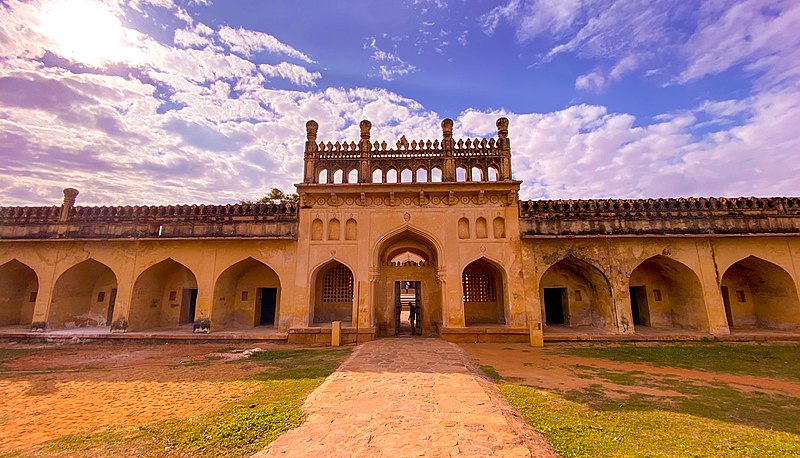
One of the most striking features of Koilkonda Fort is its seven massive entrance gates, each designed with defensive precision. These gates were not merely entrances but layered security mechanisms meant to slow down invading armies.


Key architectural highlights include:


Seven fortified gateways, each symbolizing different layers of defense


Long stone pathways leading uphill, ideal for surveillance


Watchtowers, bastions, and thick fort walls spread across a vast area


Strategic elevation offering panoramic views of the surrounding plains


The fort’s scale and layout clearly reflect advanced military engineering, surpassing even the famed Golconda Fort in sheer size and spatial planning.


koilakonda fort entrace


seven gates view of koilakonda fort


aeriel view of koilakonda fort built by vadderajulu 


---


A Fort Larger Than Legends


While Golconda Fort is celebrated worldwide, Koilkonda Fort remains a hidden giant. Spreading across a vast rocky hill, its ruins reveal:


Administrative quarters


Water storage systems


Military barracks


Secret pathways and observation points


The fact that Koilkonda Fort is three times larger than Golconda Fort underscores the importance of the Vadderajulu dynasty and their long-term vision for regional dominance.


---


Cultural and Historical Importance


Koilkonda Fort is not just a military structure—it is a living testimony of Vadderajulu legacy, reflecting:


Their loyalty to the Vijayanagara Empire


Their role in protecting dharma, culture, and regional stability


Their contribution to Telangana’s forgotten royal history


Despite centuries of neglect, the fort still echoes stories of valor, strategy, and royal pride.


---


Why Koilkonda Fort Deserves Recognition


Koilkonda Fort deserves a rightful place among India’s greatest forts because:


It represents the Vadderajulu dynasty, a powerful yet underrepresented lineage


It showcases 14th-century military architecture at a grand scale


It connects Telangana history directly with the golden age of Vijayanagara


Preserving and promoting Koilkonda Fort is essential not just for tourism, but for honoring a legacy that shaped the region.


---


Conclusion


Koilkonda Fort of Mahabubnagar is a monumental reminder of the Vadderajulu’s strength, vision, and historical significance. Built in the 14th century and flourishing during the era of Sri Krishnadevaraya and Aliya Rama Raya, this colossal fort—with its seven gates and massive expanse—stands as a silent guardian of Telangana’s glorious past.


Revisiting Koilkonda Fort is not just a journey through ruins, but a walk through the forgotten chapters of South Indian history.


Monday, September 1, 2025

ఓడ్ర దేశం (ఒరిస్సా) పరిపాలించిన ఓడ్ర రాజులు ఒడ్డె రాజులు లేదా వడ్డె రాజులు లేదా వడ్డి రాజులు లేదా వడియ రాజులు.

ఓడ్ర దేశం (ఒరిస్సా) పరిపాలించిన ఓడ్ర రాజులు ఒడ్డె రాజులు లేదా వడ్డె రాజులు లేదా వడ్డి రాజులు లేదా వడియ రాజులు.


ఓడ్ర దేశం పరిపాలించిన గొప్ప రాజులలో ఒకరు "ఖారవేలుడు రాజు".
ఖారవేళ రాజు అతను ఒడ్డవిశయం మరియు హధిగంప అను గ్రంథాలలో తను ఓడ్ర దేశం పరిపాలించిన 'ఒడ్డె రాజు' (ఓడ్ర రాజు) అని గ్రంథాల్లో చెప్పబడి ఉంది.

చేది వంశస్థులలో ప్రముఖుడు ఖారవేలుడు. హాతిగుంఫా శాసనం వల్ల ఇతడు చరిత్రలో ప్రసిద్ధిచెందినాడు. 24 సం.ల వయస్సులోనే ఇతడు కళింగ రాజ్యాధినేత అయ్యాడు.

""వడియ రాజులు""
శాతవాహనుల కాలంనాటి భాషా చారిత్రక
విషయాలు, ఈ రాజులకు ఉత్తరాన మగధ రాజులతోను, తూర్పున
ఓడ్ర రాజుల (ఖరావేలుడు) తోను గల సంబంధాలు.
ప్రాచీన కాలంలో కణ్వ బృహస్పతి హేమచంద్ర పుష్పదంత
రావణ కవిభల్లట సోమచంద్రాగస్త్యాదులు తెలుగు వ్యాకరణాలు రచించినట్లు ప్రతీతి.
వీటిలో కొన్ని సంస్కృతంలోను, కొన్ని తెలుగు పద్యాలలో
ఉన్నాయని, కొన్నిటికి పేర్లు తప్ప వాటిని గూర్చి వివరాలు
తెలియవని వినికిడి. ఈ వ్యాకరణాల మీద ఒక సమగ్ర పరిశోధనను చేపట్టాలి.

కళింగులు నేటి ఉత్తరాంధ్ర, ఒరిస్సా
ప్రాంతాలను పాలించిన రాజులు. కొన్ని చోట్ల ఆంధ్ర, కళింగ శబ్దాలు ఒకదానికొకటి కూడా
వాడబడ్డాయి. మౌర్య చక్రవర్తి అయిన అశోకుని కళింగ యుద్ధం క్రీ.పూ.255లో జరిగింది. అది భారతదేశ చరిత్రలో ఒక ప్రధాన ఘట్టము. తరువాత అశోకుడు యుద్ధ
మార్గాన్ని విడచి ధర్మాన్ని, శాంతిని ప్రధాన పాలనా విధానాలుగా చేకొన్నాడు.
అశోకుని సామ్రాజ్యం క్షీణించిన తరువాత క్రీ.శ. 183లో ఖారవేలుడు కళింగ
రాజయ్యాడు. మౌర్య సామ్రాజ్యంపై
తిరుగుబాటు చేసిన మొదటి స్వతంత్ర కళింగ రాజు ఇతడు. పాటలీపుత్రాన్ని పాలిస్తున్న
పుష్యమిత్రుని ఓడించి మౌర్య
రాజులు అంతకుముందు తీసుకువెళ్ళిన జైన విగ్రహాలను తిరిగి కళింగ రాజ్యానికి తీసుకొచ్చాడు. ఖారవేలుడు జైన మతస్థుడు.
వతషభ లాంఛనుడు. ఇతని రాజధాని
ప్రస్తుతం శ్రీకాకుళం జిల్లా పర్లాకిమిడి వద్దనున్న ముఖలింగం . ఖారవేలునికి సమకాలీనుడు ఆంధ్రదేశంలో
శాతవాహన రాజు శాతకర్ణి. వారికి మధ్య పెద్ద యుద్ధం జరిగింది. ఆ యుద్ధంలో
పిథుండ నగరాన్ని ఖారవేలుడు నాశనం చేశాడని హథీగుంఫ శాసనం (క్రీ.పూ. 183) ద్వారా తెలుస్తుంది. అయితే ఆ యుద్ధంలో ఖారవేలుడు విజయం సాధించాడని చెప్పలేము - "శాతకర్ణిని
లక్ష్యం చేయక ఖారవేలుని
సైన్యాలు కణ్ణబెణ్ణానది (కృష్ణానది)
వరకు పురోగమించి ముషికనగరాన్ని
హడలుకొట్టినాయట." ఏమయినా
తరచూ కళింగుల మధ్య, శాతవాహనుల
మధ్య జరిగిన యుద్ధాలవల్ల
తీరాంధ్రప్రాంతం కొంత కళింగుల
వశమయ్యింది. ఆంధ్రులకు చాలా
నష్టం జరిగింది. పిథుండ నగగరం బహుశా
"ప్రతిపాలపురం" లేదా భట్టిప్రోలు అయ్యి ఉండవచ్చును. ఖారవేలుడు సర్వ రాష్ట్రిక, భోజక ప్రభువులను ఓడించాడు. అంగ వంగ
దేశాలనుండి రత్నాలు తెచ్చాడు.
ఖారవేలుడు యుద్ధవీరుడే కాక ఎంతో
సమర్ధత గల రాజు. పౌర జానపదులకు అనేక సౌకర్యాలు కలిగించాడు.
అంతకు పూర్వం మగధ రాజులు వేయించిన కాలువలు పూడిపోగా ఖారవేలుడు వాటిని తిరిగి
మరమ్మతు చేయించాడు. రాజధానికి
నీటివసతి కల్పించాడు. జైనానికి ఇతోధికంగా ప్రోత్సాహం కలిగించాడు. 164 జైనమత గ్రంధాలను పునరుద్ధరించాడు. తుఫానులవలన
పడిపోయిన గోపుర ప్రాకారాలను బాగుచేయించాడు. 35 లక్షల
ప్రజలు అతని రాజ్యంలో ఉండేవారు.

తిరుమల అగ్ర గోపురం (గాలి గోపురం) – వడ్డెరాజులు వంశానికి చెందిన అనంత రాజు నిర్మాణం

  తిరుమల అగ్ర గోపురం (గాలి గోపురం) – వడ్డెరాజులు వంశానికి చెందిన అనంత రాజు నిర్మాణం పరిచయం తిరుమల పవిత్ర క్షేత్రంలో, అలిపిరి మార్గం నుండి లె...